We ask about work, about sleeves, about how often you want to see it. Those answers change the design as much as the subject does.
Bring the physical thing if you still have it. A photograph of a handwritten note carries the pressure of the pen and the way the letters lean. Retyping it in a script font loses exactly the part that made it theirs.
When to Get One
There is no correct timeline, and anyone who tells you otherwise is guessing. Some people book within a month because they want something to hold. Others wait years until the design finally settles in their head.
Both are fine. A consultation costs nothing and does not commit you to a date, so coming in to talk it through is often the useful first step even if you are not ready to be tattooed.
Questions People Ask Before a Memorial Piece
These come up in almost every memorial consultation we do. If yours is not here, ask it when you come in.
Do I need the design finished before I book?
No. Most people arrive with a photo, a name, and a feeling. Turning that into a design is part of what you are booking, and our custom tattoo design process starts from whatever you have.
Can you work from a bad photo?
Often, yes. Older photos and phone screenshots are normal for this work. Bring everything you have rather than only the clearest one, because a second angle frequently fills in what the first one lost.
How long does a memorial tattoo take?
A small handwritten name is usually one short sitting. A detailed portrait can run several hours or across multiple sessions. We give you a realistic estimate at the consultation instead of after you are already in the chair.
Can a memorial piece cover a scar?
Sometimes the loss and the scar are the same event. That is its own conversation and we handle it through our scar cover-up work in Denham Springs, where timing and skin condition both matter.
Is it strange to cry in the chair?
No. It happens regularly and nobody in the studio thinks anything of it. Say so if you need a break and we stop.
Bring us the photo, the handwriting, or just the name. Memorial pieces start with a conversation and no obligation. Call or text if it is easier than filling in a form.
Color is not off the table. It earns its place when the memory is genuinely colorful, a particular flower or a team or a childhood object. We will tell you honestly which way we think a design should go.
Choosing Placement You Can Live With
Grief is not on a schedule and neither is who you feel like explaining it to. A forearm piece is part of every conversation you have. The same design on an upper arm or a calf is yours to show when you decide to.
We ask about work, about sleeves, about how often you want to see it. Those answers change the design as much as the subject does.
Bring the physical thing if you still have it. A photograph of a handwritten note carries the pressure of the pen and the way the letters lean. Retyping it in a script font loses exactly the part that made it theirs.
When to Get One
There is no correct timeline, and anyone who tells you otherwise is guessing. Some people book within a month because they want something to hold. Others wait years until the design finally settles in their head.
Both are fine. A consultation costs nothing and does not commit you to a date, so coming in to talk it through is often the useful first step even if you are not ready to be tattooed.
Questions People Ask Before a Memorial Piece
These come up in almost every memorial consultation we do. If yours is not here, ask it when you come in.
Do I need the design finished before I book?
No. Most people arrive with a photo, a name, and a feeling. Turning that into a design is part of what you are booking, and our custom tattoo design process starts from whatever you have.
Can you work from a bad photo?
Often, yes. Older photos and phone screenshots are normal for this work. Bring everything you have rather than only the clearest one, because a second angle frequently fills in what the first one lost.
How long does a memorial tattoo take?
A small handwritten name is usually one short sitting. A detailed portrait can run several hours or across multiple sessions. We give you a realistic estimate at the consultation instead of after you are already in the chair.
Can a memorial piece cover a scar?
Sometimes the loss and the scar are the same event. That is its own conversation and we handle it through our scar cover-up work in Denham Springs, where timing and skin condition both matter.
Is it strange to cry in the chair?
No. It happens regularly and nobody in the studio thinks anything of it. Say so if you need a break and we stop.
Bring us the photo, the handwriting, or just the name. Memorial pieces start with a conversation and no obligation. Call or text if it is easier than filling in a form.
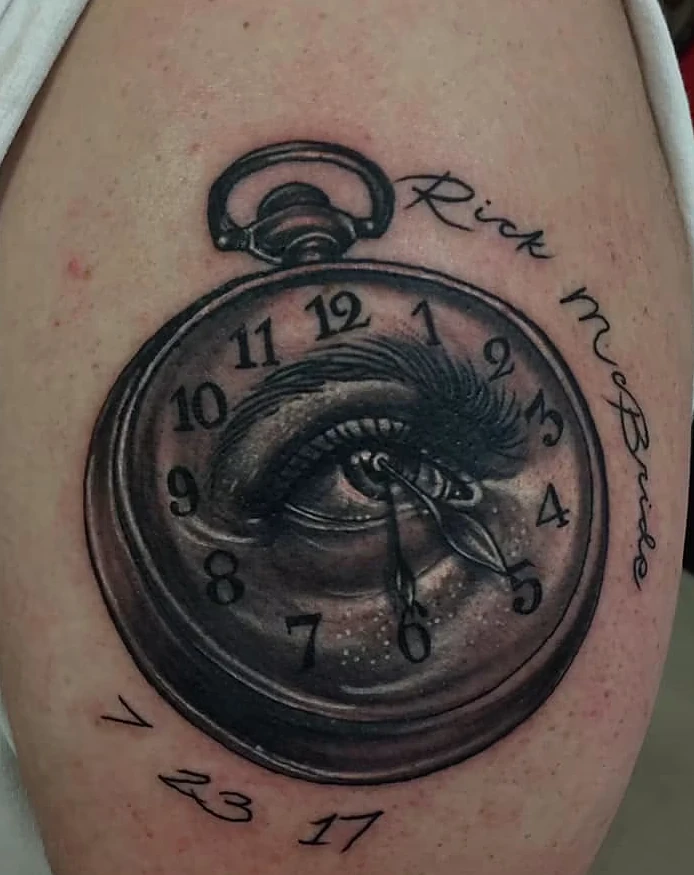
Any of these can stand alone or combine. The strongest memorial pieces usually do less than the client first imagines, not more.
Why Most Memorial Work Is Black and Gray
Black and gray is the core of what our artists do, and it suits this work for reasons beyond preference. Soft shading holds its edges as it settles, portraits read more like a photograph than an illustration, and the finished piece sits quietly on the skin instead of announcing itself.
Color is not off the table. It earns its place when the memory is genuinely colorful, a particular flower or a team or a childhood object. We will tell you honestly which way we think a design should go.
Choosing Placement You Can Live With
Grief is not on a schedule and neither is who you feel like explaining it to. A forearm piece is part of every conversation you have. The same design on an upper arm or a calf is yours to show when you decide to.
We ask about work, about sleeves, about how often you want to see it. Those answers change the design as much as the subject does.
Bring the physical thing if you still have it. A photograph of a handwritten note carries the pressure of the pen and the way the letters lean. Retyping it in a script font loses exactly the part that made it theirs.
When to Get One
There is no correct timeline, and anyone who tells you otherwise is guessing. Some people book within a month because they want something to hold. Others wait years until the design finally settles in their head.
Both are fine. A consultation costs nothing and does not commit you to a date, so coming in to talk it through is often the useful first step even if you are not ready to be tattooed.
Questions People Ask Before a Memorial Piece
These come up in almost every memorial consultation we do. If yours is not here, ask it when you come in.
Do I need the design finished before I book?
No. Most people arrive with a photo, a name, and a feeling. Turning that into a design is part of what you are booking, and our custom tattoo design process starts from whatever you have.
Can you work from a bad photo?
Often, yes. Older photos and phone screenshots are normal for this work. Bring everything you have rather than only the clearest one, because a second angle frequently fills in what the first one lost.
How long does a memorial tattoo take?
A small handwritten name is usually one short sitting. A detailed portrait can run several hours or across multiple sessions. We give you a realistic estimate at the consultation instead of after you are already in the chair.
Can a memorial piece cover a scar?
Sometimes the loss and the scar are the same event. That is its own conversation and we handle it through our scar cover-up work in Denham Springs, where timing and skin condition both matter.
Is it strange to cry in the chair?
No. It happens regularly and nobody in the studio thinks anything of it. Say so if you need a break and we stop.
Bring us the photo, the handwriting, or just the name. Memorial pieces start with a conversation and no obligation. Call or text if it is easier than filling in a form.
A memorial tattoo turns a loss into something you carry on purpose. Most people choose one of four anchors: a name in real handwriting, a date, a portrait, or a symbol that only the family reads correctly. There is no correct waiting period, and the design does not have to be finished before you book a consultation.
TLDR:
- Handwriting, dates, portraits, and private symbols are the four anchors that hold up over decades.
- Black and gray is the usual choice for memorial work because it ages softly and reads as quiet rather than loud.
- Placement matters more than size. Somewhere you can cover or reveal on your own terms is worth more than somewhere large.
- Bring anything physical you have. A signed card, a hospital bracelet, a handwritten recipe.
- There is no right amount of time to wait. Some people come in at three weeks and some at thirty years.
- Every memorial piece at Tattootopia starts with a conversation, not a deposit.
Denham Springs is a small enough place that grief travels. People come into the studio because a friend showed them a piece across a kitchen table, or because they drove past on Florida Avenue for years and finally had a reason to stop. Memorial work is the most careful thing we do, and it is the work we take the most time over.
What Makes a Memorial Tattoo Hold Up Over Time
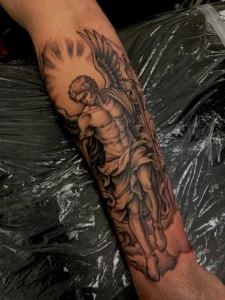
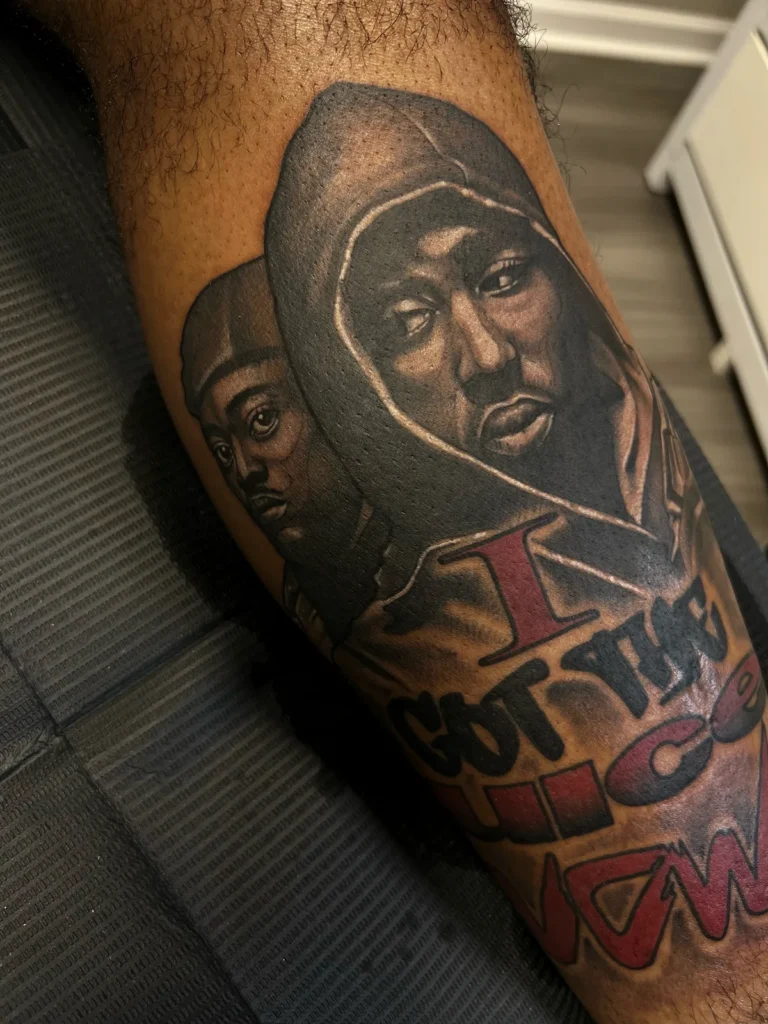
The pieces people still love twenty years later tend to be built on something specific rather than something general. A heart is a heart. A signature in the actual handwriting of the person who signed it is only ever theirs.
- Handwriting. A card, a note, a recipe, a signature off a document. We can work from a photo of the original.
- Dates and coordinates. Quiet, small, and readable only by the people who need to read it.
- Portraits. The most demanding option and the one that most rewards a good reference photo.
- Private symbols. A flower from a garden, a bird someone always pointed out, an object from a workshop.
Any of these can stand alone or combine. The strongest memorial pieces usually do less than the client first imagines, not more.
Why Most Memorial Work Is Black and Gray
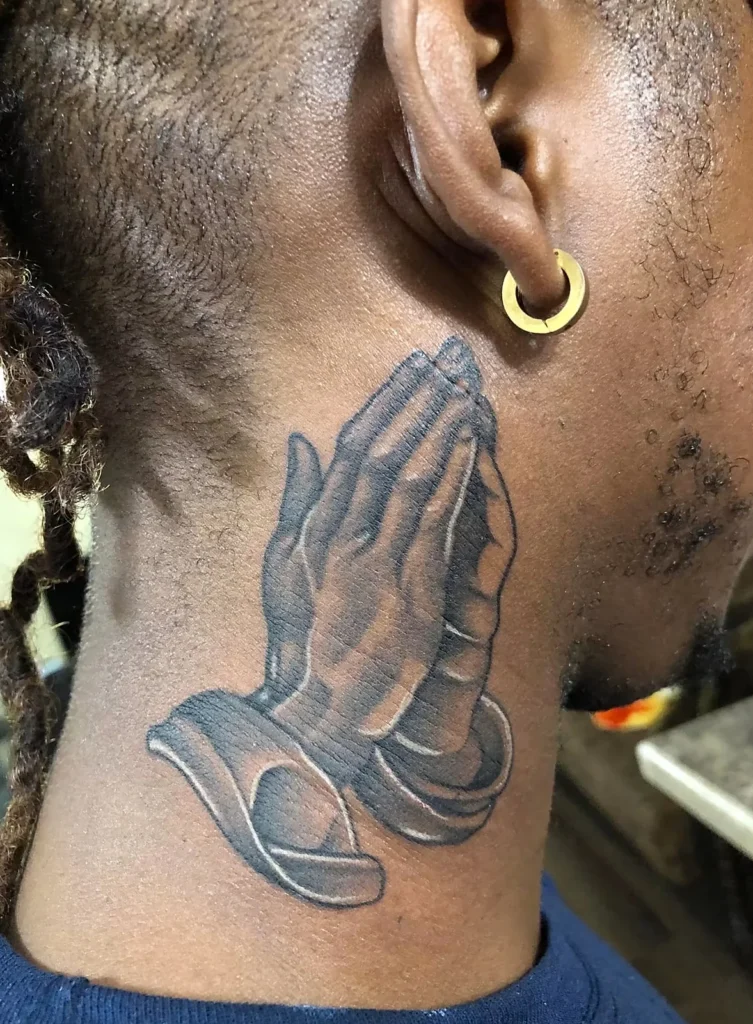
Black and gray is the core of what our artists do, and it suits this work for reasons beyond preference. Soft shading holds its edges as it settles, portraits read more like a photograph than an illustration, and the finished piece sits quietly on the skin instead of announcing itself.
Color is not off the table. It earns its place when the memory is genuinely colorful, a particular flower or a team or a childhood object. We will tell you honestly which way we think a design should go.
Choosing Placement You Can Live With
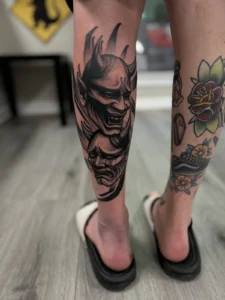
Grief is not on a schedule and neither is who you feel like explaining it to. A forearm piece is part of every conversation you have. The same design on an upper arm or a calf is yours to show when you decide to.
We ask about work, about sleeves, about how often you want to see it. Those answers change the design as much as the subject does.
Bring the physical thing if you still have it. A photograph of a handwritten note carries the pressure of the pen and the way the letters lean. Retyping it in a script font loses exactly the part that made it theirs.
When to Get One
There is no correct timeline, and anyone who tells you otherwise is guessing. Some people book within a month because they want something to hold. Others wait years until the design finally settles in their head.
Both are fine. A consultation costs nothing and does not commit you to a date, so coming in to talk it through is often the useful first step even if you are not ready to be tattooed.
Questions People Ask Before a Memorial Piece
These come up in almost every memorial consultation we do. If yours is not here, ask it when you come in.
Do I need the design finished before I book?
No. Most people arrive with a photo, a name, and a feeling. Turning that into a design is part of what you are booking, and our custom tattoo design process starts from whatever you have.
Can you work from a bad photo?
Often, yes. Older photos and phone screenshots are normal for this work. Bring everything you have rather than only the clearest one, because a second angle frequently fills in what the first one lost.
How long does a memorial tattoo take?
A small handwritten name is usually one short sitting. A detailed portrait can run several hours or across multiple sessions. We give you a realistic estimate at the consultation instead of after you are already in the chair.
Can a memorial piece cover a scar?
Sometimes the loss and the scar are the same event. That is its own conversation and we handle it through our scar cover-up work in Denham Springs, where timing and skin condition both matter.
Is it strange to cry in the chair?
No. It happens regularly and nobody in the studio thinks anything of it. Say so if you need a break and we stop.
Bring us the photo, the handwriting, or just the name. Memorial pieces start with a conversation and no obligation. Call or text if it is easier than filling in a form.
Color is not off the table. It earns its place when the memory is genuinely colorful, a particular flower or a team or a childhood object. We will tell you honestly which way we think a design should go.
Choosing Placement You Can Live With
Grief is not on a schedule and neither is who you feel like explaining it to. A forearm piece is part of every conversation you have. The same design on an upper arm or a calf is yours to show when you decide to.
We ask about work, about sleeves, about how often you want to see it. Those answers change the design as much as the subject does.
Bring the physical thing if you still have it. A photograph of a handwritten note carries the pressure of the pen and the way the letters lean. Retyping it in a script font loses exactly the part that made it theirs.
When to Get One
There is no correct timeline, and anyone who tells you otherwise is guessing. Some people book within a month because they want something to hold. Others wait years until the design finally settles in their head.
Both are fine. A consultation costs nothing and does not commit you to a date, so coming in to talk it through is often the useful first step even if you are not ready to be tattooed.
Questions People Ask Before a Memorial Piece
These come up in almost every memorial consultation we do. If yours is not here, ask it when you come in.
Do I need the design finished before I book?
No. Most people arrive with a photo, a name, and a feeling. Turning that into a design is part of what you are booking, and our custom tattoo design process starts from whatever you have.
Can you work from a bad photo?
Often, yes. Older photos and phone screenshots are normal for this work. Bring everything you have rather than only the clearest one, because a second angle frequently fills in what the first one lost.
How long does a memorial tattoo take?
A small handwritten name is usually one short sitting. A detailed portrait can run several hours or across multiple sessions. We give you a realistic estimate at the consultation instead of after you are already in the chair.
Can a memorial piece cover a scar?
Sometimes the loss and the scar are the same event. That is its own conversation and we handle it through our scar cover-up work in Denham Springs, where timing and skin condition both matter.
Is it strange to cry in the chair?
No. It happens regularly and nobody in the studio thinks anything of it. Say so if you need a break and we stop.
Bring us the photo, the handwriting, or just the name. Memorial pieces start with a conversation and no obligation. Call or text if it is easier than filling in a form.
A memorial tattoo turns a loss into something you carry on purpose. Most people choose one of four anchors: a name in real handwriting, a date, a portrait, or a symbol that only the family reads correctly. There is no correct waiting period, and the design does not have to be finished before you book a consultation.
TLDR:
- Handwriting, dates, portraits, and private symbols are the four anchors that hold up over decades.
- Black and gray is the usual choice for memorial work because it ages softly and reads as quiet rather than loud.
- Placement matters more than size. Somewhere you can cover or reveal on your own terms is worth more than somewhere large.
- Bring anything physical you have. A signed card, a hospital bracelet, a handwritten recipe.
- There is no right amount of time to wait. Some people come in at three weeks and some at thirty years.
- Every memorial piece at Tattootopia starts with a conversation, not a deposit.
Denham Springs is a small enough place that grief travels. People come into the studio because a friend showed them a piece across a kitchen table, or because they drove past on Florida Avenue for years and finally had a reason to stop. Memorial work is the most careful thing we do, and it is the work we take the most time over.
What Makes a Memorial Tattoo Hold Up Over Time
The pieces people still love twenty years later tend to be built on something specific rather than something general. A heart is a heart. A signature in the actual handwriting of the person who signed it is only ever theirs.
- Handwriting. A card, a note, a recipe, a signature off a document. We can work from a photo of the original.
- Dates and coordinates. Quiet, small, and readable only by the people who need to read it.
- Portraits. The most demanding option and the one that most rewards a good reference photo.
- Private symbols. A flower from a garden, a bird someone always pointed out, an object from a workshop.
Any of these can stand alone or combine. The strongest memorial pieces usually do less than the client first imagines, not more.
Why Most Memorial Work Is Black and Gray
Black and gray is the core of what our artists do, and it suits this work for reasons beyond preference. Soft shading holds its edges as it settles, portraits read more like a photograph than an illustration, and the finished piece sits quietly on the skin instead of announcing itself.
Color is not off the table. It earns its place when the memory is genuinely colorful, a particular flower or a team or a childhood object. We will tell you honestly which way we think a design should go.
Choosing Placement You Can Live With
Grief is not on a schedule and neither is who you feel like explaining it to. A forearm piece is part of every conversation you have. The same design on an upper arm or a calf is yours to show when you decide to.
We ask about work, about sleeves, about how often you want to see it. Those answers change the design as much as the subject does.
Bring the physical thing if you still have it. A photograph of a handwritten note carries the pressure of the pen and the way the letters lean. Retyping it in a script font loses exactly the part that made it theirs.
When to Get One
There is no correct timeline, and anyone who tells you otherwise is guessing. Some people book within a month because they want something to hold. Others wait years until the design finally settles in their head.
Both are fine. A consultation costs nothing and does not commit you to a date, so coming in to talk it through is often the useful first step even if you are not ready to be tattooed.
Questions People Ask Before a Memorial Piece
These come up in almost every memorial consultation we do. If yours is not here, ask it when you come in.
Do I need the design finished before I book?
No. Most people arrive with a photo, a name, and a feeling. Turning that into a design is part of what you are booking, and our custom tattoo design process starts from whatever you have.
Can you work from a bad photo?
Often, yes. Older photos and phone screenshots are normal for this work. Bring everything you have rather than only the clearest one, because a second angle frequently fills in what the first one lost.
How long does a memorial tattoo take?
A small handwritten name is usually one short sitting. A detailed portrait can run several hours or across multiple sessions. We give you a realistic estimate at the consultation instead of after you are already in the chair.
Can a memorial piece cover a scar?
Sometimes the loss and the scar are the same event. That is its own conversation and we handle it through our scar cover-up work in Denham Springs, where timing and skin condition both matter.
Is it strange to cry in the chair?
No. It happens regularly and nobody in the studio thinks anything of it. Say so if you need a break and we stop.
Bring us the photo, the handwriting, or just the name. Memorial pieces start with a conversation and no obligation. Call or text if it is easier than filling in a form.
Any of these can stand alone or combine. The strongest memorial pieces usually do less than the client first imagines, not more.
Why Most Memorial Work Is Black and Gray
Black and gray is the core of what our artists do, and it suits this work for reasons beyond preference. Soft shading holds its edges as it settles, portraits read more like a photograph than an illustration, and the finished piece sits quietly on the skin instead of announcing itself.
Color is not off the table. It earns its place when the memory is genuinely colorful, a particular flower or a team or a childhood object. We will tell you honestly which way we think a design should go.
Choosing Placement You Can Live With
Grief is not on a schedule and neither is who you feel like explaining it to. A forearm piece is part of every conversation you have. The same design on an upper arm or a calf is yours to show when you decide to.
We ask about work, about sleeves, about how often you want to see it. Those answers change the design as much as the subject does.
Bring the physical thing if you still have it. A photograph of a handwritten note carries the pressure of the pen and the way the letters lean. Retyping it in a script font loses exactly the part that made it theirs.
When to Get One
There is no correct timeline, and anyone who tells you otherwise is guessing. Some people book within a month because they want something to hold. Others wait years until the design finally settles in their head.
Both are fine. A consultation costs nothing and does not commit you to a date, so coming in to talk it through is often the useful first step even if you are not ready to be tattooed.
Questions People Ask Before a Memorial Piece
These come up in almost every memorial consultation we do. If yours is not here, ask it when you come in.
Do I need the design finished before I book?
No. Most people arrive with a photo, a name, and a feeling. Turning that into a design is part of what you are booking, and our custom tattoo design process starts from whatever you have.
Can you work from a bad photo?
Often, yes. Older photos and phone screenshots are normal for this work. Bring everything you have rather than only the clearest one, because a second angle frequently fills in what the first one lost.
How long does a memorial tattoo take?
A small handwritten name is usually one short sitting. A detailed portrait can run several hours or across multiple sessions. We give you a realistic estimate at the consultation instead of after you are already in the chair.
Can a memorial piece cover a scar?
Sometimes the loss and the scar are the same event. That is its own conversation and we handle it through our scar cover-up work in Denham Springs, where timing and skin condition both matter.
Is it strange to cry in the chair?
No. It happens regularly and nobody in the studio thinks anything of it. Say so if you need a break and we stop.
Bring us the photo, the handwriting, or just the name. Memorial pieces start with a conversation and no obligation. Call or text if it is easier than filling in a form.
A memorial tattoo turns a loss into something you carry on purpose. Most people choose one of four anchors: a name in real handwriting, a date, a portrait, or a symbol that only the family reads correctly. There is no correct waiting period, and the design does not have to be finished before you book a consultation.
TLDR:
- Handwriting, dates, portraits, and private symbols are the four anchors that hold up over decades.
- Black and gray is the usual choice for memorial work because it ages softly and reads as quiet rather than loud.
- Placement matters more than size. Somewhere you can cover or reveal on your own terms is worth more than somewhere large.
- Bring anything physical you have. A signed card, a hospital bracelet, a handwritten recipe.
- There is no right amount of time to wait. Some people come in at three weeks and some at thirty years.
- Every memorial piece at Tattootopia starts with a conversation, not a deposit.
Denham Springs is a small enough place that grief travels. People come into the studio because a friend showed them a piece across a kitchen table, or because they drove past on Florida Avenue for years and finally had a reason to stop. Memorial work is the most careful thing we do, and it is the work we take the most time over.
What Makes a Memorial Tattoo Hold Up Over Time
The pieces people still love twenty years later tend to be built on something specific rather than something general. A heart is a heart. A signature in the actual handwriting of the person who signed it is only ever theirs.
- Handwriting. A card, a note, a recipe, a signature off a document. We can work from a photo of the original.
- Dates and coordinates. Quiet, small, and readable only by the people who need to read it.
- Portraits. The most demanding option and the one that most rewards a good reference photo.
- Private symbols. A flower from a garden, a bird someone always pointed out, an object from a workshop.
Any of these can stand alone or combine. The strongest memorial pieces usually do less than the client first imagines, not more.
Why Most Memorial Work Is Black and Gray
Black and gray is the core of what our artists do, and it suits this work for reasons beyond preference. Soft shading holds its edges as it settles, portraits read more like a photograph than an illustration, and the finished piece sits quietly on the skin instead of announcing itself.
Color is not off the table. It earns its place when the memory is genuinely colorful, a particular flower or a team or a childhood object. We will tell you honestly which way we think a design should go.
Choosing Placement You Can Live With
Grief is not on a schedule and neither is who you feel like explaining it to. A forearm piece is part of every conversation you have. The same design on an upper arm or a calf is yours to show when you decide to.
We ask about work, about sleeves, about how often you want to see it. Those answers change the design as much as the subject does.
Bring the physical thing if you still have it. A photograph of a handwritten note carries the pressure of the pen and the way the letters lean. Retyping it in a script font loses exactly the part that made it theirs.
When to Get One
There is no correct timeline, and anyone who tells you otherwise is guessing. Some people book within a month because they want something to hold. Others wait years until the design finally settles in their head.
Both are fine. A consultation costs nothing and does not commit you to a date, so coming in to talk it through is often the useful first step even if you are not ready to be tattooed.
Questions People Ask Before a Memorial Piece
These come up in almost every memorial consultation we do. If yours is not here, ask it when you come in.
Do I need the design finished before I book?
No. Most people arrive with a photo, a name, and a feeling. Turning that into a design is part of what you are booking, and our custom tattoo design process starts from whatever you have.
Can you work from a bad photo?
Often, yes. Older photos and phone screenshots are normal for this work. Bring everything you have rather than only the clearest one, because a second angle frequently fills in what the first one lost.
How long does a memorial tattoo take?
A small handwritten name is usually one short sitting. A detailed portrait can run several hours or across multiple sessions. We give you a realistic estimate at the consultation instead of after you are already in the chair.
Can a memorial piece cover a scar?
Sometimes the loss and the scar are the same event. That is its own conversation and we handle it through our scar cover-up work in Denham Springs, where timing and skin condition both matter.
Is it strange to cry in the chair?
No. It happens regularly and nobody in the studio thinks anything of it. Say so if you need a break and we stop.
Bring us the photo, the handwriting, or just the name. Memorial pieces start with a conversation and no obligation. Call or text if it is easier than filling in a form.
Color is not off the table. It earns its place when the memory is genuinely colorful, a particular flower or a team or a childhood object. We will tell you honestly which way we think a design should go.
Choosing Placement You Can Live With
Grief is not on a schedule and neither is who you feel like explaining it to. A forearm piece is part of every conversation you have. The same design on an upper arm or a calf is yours to show when you decide to.
We ask about work, about sleeves, about how often you want to see it. Those answers change the design as much as the subject does.
Bring the physical thing if you still have it. A photograph of a handwritten note carries the pressure of the pen and the way the letters lean. Retyping it in a script font loses exactly the part that made it theirs.
When to Get One
There is no correct timeline, and anyone who tells you otherwise is guessing. Some people book within a month because they want something to hold. Others wait years until the design finally settles in their head.
Both are fine. A consultation costs nothing and does not commit you to a date, so coming in to talk it through is often the useful first step even if you are not ready to be tattooed.
Questions People Ask Before a Memorial Piece
These come up in almost every memorial consultation we do. If yours is not here, ask it when you come in.
Do I need the design finished before I book?
No. Most people arrive with a photo, a name, and a feeling. Turning that into a design is part of what you are booking, and our custom tattoo design process starts from whatever you have.
Can you work from a bad photo?
Often, yes. Older photos and phone screenshots are normal for this work. Bring everything you have rather than only the clearest one, because a second angle frequently fills in what the first one lost.
How long does a memorial tattoo take?
A small handwritten name is usually one short sitting. A detailed portrait can run several hours or across multiple sessions. We give you a realistic estimate at the consultation instead of after you are already in the chair.
Can a memorial piece cover a scar?
Sometimes the loss and the scar are the same event. That is its own conversation and we handle it through our scar cover-up work in Denham Springs, where timing and skin condition both matter.
Is it strange to cry in the chair?
No. It happens regularly and nobody in the studio thinks anything of it. Say so if you need a break and we stop.
Bring us the photo, the handwriting, or just the name. Memorial pieces start with a conversation and no obligation. Call or text if it is easier than filling in a form.
Any of these can stand alone or combine. The strongest memorial pieces usually do less than the client first imagines, not more.
Why Most Memorial Work Is Black and Gray
Black and gray is the core of what our artists do, and it suits this work for reasons beyond preference. Soft shading holds its edges as it settles, portraits read more like a photograph than an illustration, and the finished piece sits quietly on the skin instead of announcing itself.
Color is not off the table. It earns its place when the memory is genuinely colorful, a particular flower or a team or a childhood object. We will tell you honestly which way we think a design should go.
Choosing Placement You Can Live With
Grief is not on a schedule and neither is who you feel like explaining it to. A forearm piece is part of every conversation you have. The same design on an upper arm or a calf is yours to show when you decide to.
We ask about work, about sleeves, about how often you want to see it. Those answers change the design as much as the subject does.
Bring the physical thing if you still have it. A photograph of a handwritten note carries the pressure of the pen and the way the letters lean. Retyping it in a script font loses exactly the part that made it theirs.
When to Get One
There is no correct timeline, and anyone who tells you otherwise is guessing. Some people book within a month because they want something to hold. Others wait years until the design finally settles in their head.
Both are fine. A consultation costs nothing and does not commit you to a date, so coming in to talk it through is often the useful first step even if you are not ready to be tattooed.
Questions People Ask Before a Memorial Piece
These come up in almost every memorial consultation we do. If yours is not here, ask it when you come in.
Do I need the design finished before I book?
No. Most people arrive with a photo, a name, and a feeling. Turning that into a design is part of what you are booking, and our custom tattoo design process starts from whatever you have.
Can you work from a bad photo?
Often, yes. Older photos and phone screenshots are normal for this work. Bring everything you have rather than only the clearest one, because a second angle frequently fills in what the first one lost.
How long does a memorial tattoo take?
A small handwritten name is usually one short sitting. A detailed portrait can run several hours or across multiple sessions. We give you a realistic estimate at the consultation instead of after you are already in the chair.
Can a memorial piece cover a scar?
Sometimes the loss and the scar are the same event. That is its own conversation and we handle it through our scar cover-up work in Denham Springs, where timing and skin condition both matter.
Is it strange to cry in the chair?
No. It happens regularly and nobody in the studio thinks anything of it. Say so if you need a break and we stop.
Bring us the photo, the handwriting, or just the name. Memorial pieces start with a conversation and no obligation. Call or text if it is easier than filling in a form.
A memorial tattoo turns a loss into something you carry on purpose. Most people choose one of four anchors: a name in real handwriting, a date, a portrait, or a symbol that only the family reads correctly. There is no correct waiting period, and the design does not have to be finished before you book a consultation.
TLDR:
- Handwriting, dates, portraits, and private symbols are the four anchors that hold up over decades.
- Black and gray is the usual choice for memorial work because it ages softly and reads as quiet rather than loud.
- Placement matters more than size. Somewhere you can cover or reveal on your own terms is worth more than somewhere large.
- Bring anything physical you have. A signed card, a hospital bracelet, a handwritten recipe.
- There is no right amount of time to wait. Some people come in at three weeks and some at thirty years.
- Every memorial piece at Tattootopia starts with a conversation, not a deposit.
Denham Springs is a small enough place that grief travels. People come into the studio because a friend showed them a piece across a kitchen table, or because they drove past on Florida Avenue for years and finally had a reason to stop. Memorial work is the most careful thing we do, and it is the work we take the most time over.
What Makes a Memorial Tattoo Hold Up Over Time
The pieces people still love twenty years later tend to be built on something specific rather than something general. A heart is a heart. A signature in the actual handwriting of the person who signed it is only ever theirs.
- Handwriting. A card, a note, a recipe, a signature off a document. We can work from a photo of the original.
- Dates and coordinates. Quiet, small, and readable only by the people who need to read it.
- Portraits. The most demanding option and the one that most rewards a good reference photo.
- Private symbols. A flower from a garden, a bird someone always pointed out, an object from a workshop.
Any of these can stand alone or combine. The strongest memorial pieces usually do less than the client first imagines, not more.
Why Most Memorial Work Is Black and Gray
Black and gray is the core of what our artists do, and it suits this work for reasons beyond preference. Soft shading holds its edges as it settles, portraits read more like a photograph than an illustration, and the finished piece sits quietly on the skin instead of announcing itself.
Color is not off the table. It earns its place when the memory is genuinely colorful, a particular flower or a team or a childhood object. We will tell you honestly which way we think a design should go.
Choosing Placement You Can Live With
Grief is not on a schedule and neither is who you feel like explaining it to. A forearm piece is part of every conversation you have. The same design on an upper arm or a calf is yours to show when you decide to.
We ask about work, about sleeves, about how often you want to see it. Those answers change the design as much as the subject does.
Bring the physical thing if you still have it. A photograph of a handwritten note carries the pressure of the pen and the way the letters lean. Retyping it in a script font loses exactly the part that made it theirs.
When to Get One
There is no correct timeline, and anyone who tells you otherwise is guessing. Some people book within a month because they want something to hold. Others wait years until the design finally settles in their head.
Both are fine. A consultation costs nothing and does not commit you to a date, so coming in to talk it through is often the useful first step even if you are not ready to be tattooed.
Questions People Ask Before a Memorial Piece
These come up in almost every memorial consultation we do. If yours is not here, ask it when you come in.
Do I need the design finished before I book?
No. Most people arrive with a photo, a name, and a feeling. Turning that into a design is part of what you are booking, and our custom tattoo design process starts from whatever you have.
Can you work from a bad photo?
Often, yes. Older photos and phone screenshots are normal for this work. Bring everything you have rather than only the clearest one, because a second angle frequently fills in what the first one lost.
How long does a memorial tattoo take?
A small handwritten name is usually one short sitting. A detailed portrait can run several hours or across multiple sessions. We give you a realistic estimate at the consultation instead of after you are already in the chair.
Can a memorial piece cover a scar?
Sometimes the loss and the scar are the same event. That is its own conversation and we handle it through our scar cover-up work in Denham Springs, where timing and skin condition both matter.
Is it strange to cry in the chair?
No. It happens regularly and nobody in the studio thinks anything of it. Say so if you need a break and we stop.
Bring us the photo, the handwriting, or just the name. Memorial pieces start with a conversation and no obligation. Call or text if it is easier than filling in a form.